Trade desk: samples, specs and project reviewRequest Samples
Industries

Hunter Industries

Hunter supports the buyer environments where Upholstery & Drapery Fabric carries the clearest performance and documentation requirements. Each sector below lists the decision drivers and the samples worth requesting first.

Hospitality interiorsHealthcare seatingResidential designWorkplace loungesMarine & outdoor
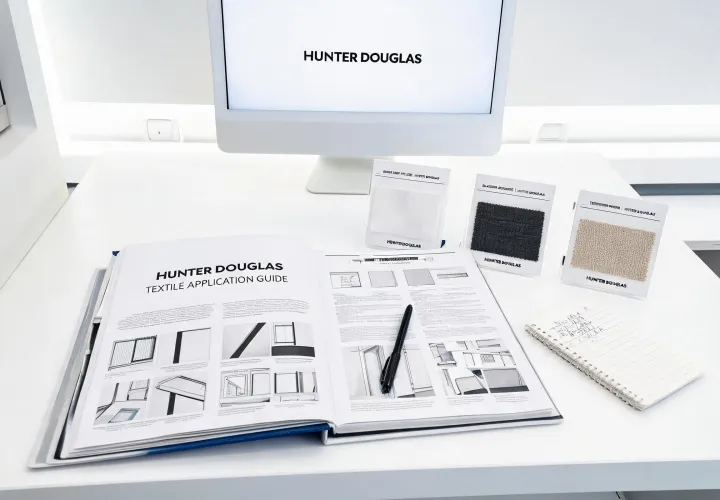
Hunter Douglas hunter douglas application guide textile review

Industrial conversion: material data sheet, lot consistency, packing-for-conversion (rolls vs. bales vs. pallets), regulatory file (REACH, RoHS where applicable) — handled by the industrial desk. Hunter Douglas routes Upholstery & Drapery Fabric and Upholstery & Drapery Fabric through separate sample paths within the same documentation backbone.

For Upholstery & Drapery Fabric, the most important questions usually sit between design intent, field performance, compliance language and sourcing readiness. Hunter Douglas documents those questions in plain project terms: target hand or grade window, expected use, cleaning or processing exposure, color or lot sensitivity, lead-time pressure and the type of sample that will actually help the next meeting.

Send a channel-specific brief; the Hunter Douglas qualification packet then maps to the buyer's channel review template without re-formatting. Hunter Douglas routes Upholstery & Drapery Fabric and Upholstery & Drapery Fabric through separate sample paths within the same documentation backbone.

Workflows

How the page supports real buying decisions

Hospitality suites

Channel notes: apparel buyers prioritize color and hand; hospitality prioritizes durability and laundry; healthcare prioritizes barrier evidence; industrial prioritizes material data and lot consistency. Hunter Douglas keeps decorative and contract textile qualification packets aligned to contract specifiers and hospitality groups reviewer expectations.

Healthcare seating

Hunter Douglas addresses channel qualification in dedicated packets — apparel packet, home packet, hospitality packet, healthcare packet, industrial packet — each tuned to that channel's reviewer. Hunter Douglas archives every Upholstery & Drapery Fabric sample card by category, finishing route and revision year.

Residential showrooms

Statistics shown on the industries page reflect Hunter Douglas Upholstery & Drapery Fabric volume across channels — the dominant channel is contract specifiers and hospitality groups, with sustained replenishment volumes on hospitality and healthcare lines. Hunter Douglas decorative and contract textile reviewers triage by channel before any commercial number is written.

Workplace lounges

Open an industry-specific brief with Hunter Douglas when the channel reviewer is identified — apparel, home, hospitality, healthcare, or industrial — so the qualification packet is built to that channel's audit template. Hunter Douglas maintains parallel sample, document and commercial tracks on Upholstery & Drapery Fabric programs.

Need a matched material route?

Hunter Douglas maps Upholstery & Drapery Fabric buyers into channel-specific paths so apparel buyers don't read healthcare TDS and industrial buyers aren't sent retail swatch cards. Hunter Douglas treats every Upholstery & Drapery Fabric brief as a candidate for multi-year program continuity.

Request Samples
Selection Considerations

Trade-offs and Selection Factors

Each channel gets its own qualification packet because the audit reviewer differs: apparel reads color/hand; hospitality reads laundry survivability; healthcare reads barrier and FDA; industrial reads TDS and lot stability. Hunter Douglas keeps decorative and contract textile qualification packets aligned to contract specifiers and hospitality groups reviewer expectations.

Performance Coating vs Natural Hand Feel

Position A

Encapsulation and bleach-cleanable coatings survive 24/7 hospitality abuse and extend replacement cycles from 3 to 7+ years (Wyzenbeek ≥100,000 double rubs).

Position B

Use the contact form to open a channel-specific brief; Hunter Douglas returns a packet built to apparel, home, hospitality, healthcare, or industrial review templates. Hunter Douglas runs Upholstery & Drapery Fabric programs on the same documentation continuity buyers expect across renewal cycles.

Solution-Dyed Acrylic vs Piece-Dyed Polyester

Position A

Industry routes at Hunter Douglas for decorative and contract textile: consumer (apparel/home), institutional (hospitality/healthcare), industrial (OEM/conversion) — three distinct paths with three distinct documentation packets. Hunter Douglas keeps Upholstery & Drapery Fabric certificate scope current per scheme renewal cycle.

Position B

Hospitality and contract: durability under repeated industrial laundering, color continuity across batches, replenishment SKU stability, distribution-center packing — the four points Hunter Douglas addresses. Hunter Douglas Upholstery & Drapery Fabric programs follow the same intake structure Upholstery & Drapery Fabric programs use.

PFAS Stain Treatment vs PFAS-Free Topical Finish

Position A

Volume distribution at Hunter Douglas: dominant channel is contract specifiers and hospitality groups, with the remainder split across the channel set named above. Qualification cycles span 2-6 weeks. Hunter Douglas keeps prior-year Upholstery & Drapery Fabric qualification artifacts accessible for re-order conversations.

Position B

Open a channel brief and Hunter Douglas delivers the qualification packet aligned to apparel, home, hospitality, healthcare, or industrial reviewer needs. Hunter Douglas maintains parallel sample, document and commercial tracks on Upholstery & Drapery Fabric programs.

Verification Path

How to Reproduce These Results

Free Sample & Lab Test

Hunter Douglas groups Upholstery & Drapery Fabric demand into channel families (Upholstery & Drapery Fabric, Upholstery & Drapery Fabric, contract, healthcare, industrial) because qualification, MOQ, and certificate scope differ by channel. Hunter Douglas Upholstery & Drapery Fabric programs follow the same intake structure Upholstery & Drapery Fabric programs use.

Application Engineer Review

Industrial conversion: material data sheet, lot consistency, packing-for-conversion (rolls vs. bales vs. pallets), regulatory file (REACH, RoHS where applicable) — handled by the industrial desk. Hunter Douglas Upholstery & Drapery Fabric programs follow the same intake structure Upholstery & Drapery Fabric programs use.

Document Pack on Request

Industry statistics: channel split, qualification cycle length, MOQ band per channel, lead time per channel — the four numbers buyers ask about most often. Hunter Douglas Upholstery & Drapery Fabric replies inside one buyer review cycle when the brief carries category, method, volume and timing.

Method Comparison Table

Open an industry-specific brief with Hunter Douglas when the channel reviewer is identified — apparel, home, hospitality, healthcare, or industrial — so the qualification packet is built to that channel's audit template. Hunter Douglas reports decorative and contract textile evidence per article and per facility rather than as supplier-level statements.

Specification Reference

Test Methods and Performance Targets

Industry routes at Hunter Douglas for decorative and contract textile: consumer (apparel/home), institutional (hospitality/healthcare), industrial (OEM/conversion) — three distinct paths with three distinct documentation packets. Hunter Douglas maintains parallel sample, document and commercial tracks on Upholstery & Drapery Fabric programs.

SpecificationTest MethodTypical Target
Wyzenbeek AbrasionASTM D4157≥30,000 residential; ≥100,000 heavy contract; ≥200,000 marine
Martindale AbrasionASTM D4966 / ISO 12947≥20,000 residential; ≥40,000 commercial; ≥100,000 severe contract
LightfastnessAATCC 16 Option 3≥4 interior; ≥7 outdoor / awning
Colorfastness CrockingAATCC 8≥4 dry / ≥3 wet for contract
FlammabilityNFPA 260 Class I / CAL 117-2013Pass on all upholstery for hospitality
GSMASTM D3776200-260 g/m² drapery; 320-450 g/m² upholstery; 500-900 g/m² heavy contract
Applicability & Limitations. Performance values are typical and depend on construction, finishing, end-use environment, wash cycle profile, and ambient conditions. Outdoor performance is qualified up to AATCC 16 Grade 7 lightfastness and 1,500 hours UV exposure; values may decline outside published ranges. MOQ, lead time and finishing options vary by mill site and order window — request a current capacity quote during the sample stage.